Dalathi: A Signature Script Font for Elegant Editorial Moments
It was a quiet Tuesday afternoon—coffee lukewarm, layout thumbnails open in Figma—and I was finalizing the cover for a new digital magazine feature on mindful living. The headline needed warmth, intention, and just enough distinction to feel personal without slipping into cliché. That’s when I opened Dalathi. Not as a last-minute flourish, but as a considered choice: a Script Handwritten font with calligraphic grace, built not for shouting, but for leaning in.
Dalathi for Wedding Invitations and Elegant Branding
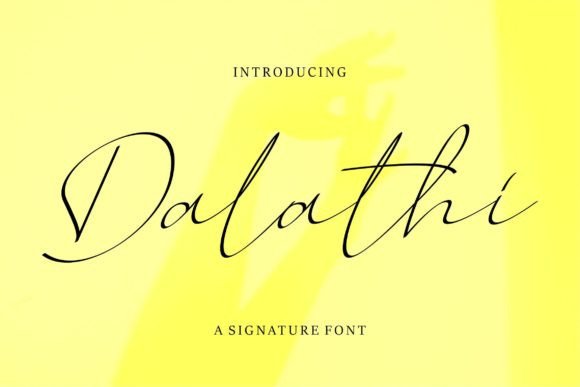
Dalathi carries the quiet confidence of ink on cotton paper—its strokes flow with organic variation, subtle contrast, and a gentle rhythm that feels both practiced and unhurried. When used for wedding invitations or branding materials, it doesn’t compete with imagery or messaging; it elevates them. I tested it across a suite of print-ready assets for a boutique wedding guide: save-the-dates, vow cards, and monogrammed envelope liners. Its elegance never reads as stiff or overly formal—instead, it settles into place like a well-chosen phrase. As a Fonts option for lifestyle creators, Dalathi supports brand identity without demanding attention. It works especially well when paired with a warm serif (like Adobe Garamond or EB Garamond) for body text—creating a visual dialogue between personality and clarity.
Dalathi for Greeting Cards and Thoughtful Newsletter Graphics
In newsletter design, space is precious—and tone is everything. I used Dalathi for the header graphic of a seasonal subscriber note: “A Slow Start to Spring.” Set at 48pt over a soft watercolor background, its calligraphy style lent sincerity without sacrificing legibility on mobile screens. Because Dalathi is a signature script font with a calligraphy style, it thrives where emotion matters more than speed: greeting cards, handwritten-style email headers, and limited-run printable thank-you notes. For screen use, I kept it above 36pt and avoided tight line spacing—giving each letter room to breathe. It’s not meant for dense paragraphs or small captions, but as a Script Handwritten accent, it adds texture and intentionality that generic sans serifs simply can’t replicate.
Dalathi for Business Cards and Minimalist Packaging Design
A client recently launched a small-batch herbal tea line—calm, botanical, quietly luxurious. Their business cards needed to reflect that ethos without floral clichés or ornate borders. Dalathi became the name treatment on matte cardstock: clean, confident, and subtly expressive. Its lowercase ‘a’, ‘g’, and ‘y’ have graceful exits that echo the curl of dried lavender stems—subtle, but resonant. As a Fonts choice for packaging or stationery, Dalathi performs best when isolated: one word, one line, one moment of focus. It pairs beautifully with thin, neutral sans serifs (think Inter Light or Manrope Thin) for supporting details—keeping hierarchy clear while preserving warmth. Just be sure your license covers commercial use in physical products—most reputable Script Handwritten fonts do, but always verify file formats (OTF/TTF) and included ligatures before final export.
Dalathi for Quotes and Poster Layouts in Digital Magazines
Pull quotes are editorial punctuation—small moments that pause the reader and deepen resonance. In a recent digital magazine layout, I set a three-line quote in Dalathi across a full-bleed photo spread. At 52pt with generous tracking, it floated effortlessly—not competing with the image, but anchoring the emotional core of the piece. This is where Dalathi is a signature script font with a calligraphy style shines most: in isolation, at scale, with intention. It’s not designed for long-form reading, nor does it need to be. Its strength lies in brevity—in turning a single sentence into a tactile experience. For posters or social media graphics, use it with ample negative space and avoid stacking multiple script fonts. One expressive voice is enough.
Dalathi for Printable Planners and Coaching Workbooks
I’ve been refining a quarterly reflection workbook for creative professionals—soft-spoken, reflective, visually uncluttered. Dalathi became the chapter opener font: “What Wants to Emerge?” set in light gray over cream paper. Its handwritten authenticity invites participation without pretense. As a Script Handwritten option for printables, Dalathi holds up well in PDF exports—even at 300dpi—and maintains character through inkjet printing. That said, avoid using it below 24pt in printed guides; its delicate terminals soften at smaller sizes. And while it’s lovely for titles and section dividers, I always pair it with a highly legible sans serif (like Lato or Open Sans) for instructions, checkboxes, and prompts. Consistency matters—but so does contrast. Let Dalathi carry the mood; let your body font carry the meaning.
What makes Dalathi more than just another decorative Fonts option is how it behaves across contexts—not as a trend, but as a tool. It doesn’t shout. It listens. It asks you to slow down, choose carefully, and trust the weight of a single word. Whether you’re designing a recipe ebook, a coaching worksheet, or a quiet digital magazine cover, Dalathi offers an editorial voice that feels both timeless and tender. If your work lives at the intersection of beauty and clarity—and if you value type that honors the reader as much as the writer—this Script Handwritten font is worth every thoughtful pause.